
2026-on Suzuki GSX-R1000R review | It still has a place
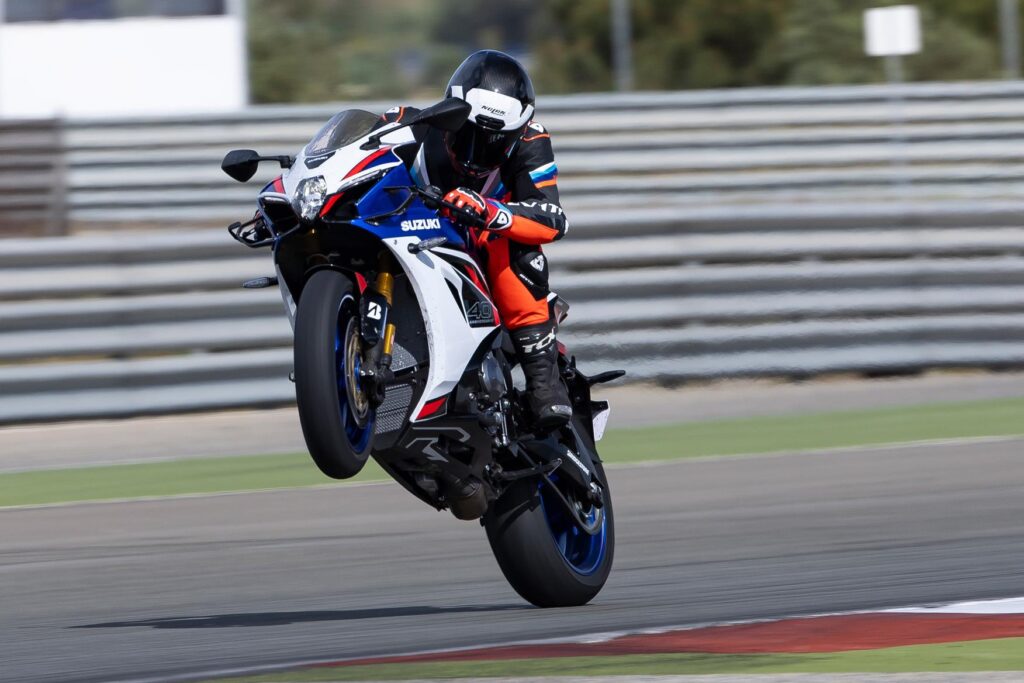
Suzuki GSX-R1000R expert review
Suzuki completely redesigned the GSX-R1000 for 2017 to great acclaim, suggesting the stagnation they’d suffered since around 2010 was over, and we’d see more new machinery.
But the ‘8’ family of parallel-twins and DR-Z4S trailie aside, we haven’t – most of the range is a mild update on what was offered a decade ago. The GSX-R Thou’ itself plugged on with no further updates until 2022, when it failed to meet Euro5.
Like this story? You can get more MCN in your life by clicking here and asking Google to make us a preferred source.
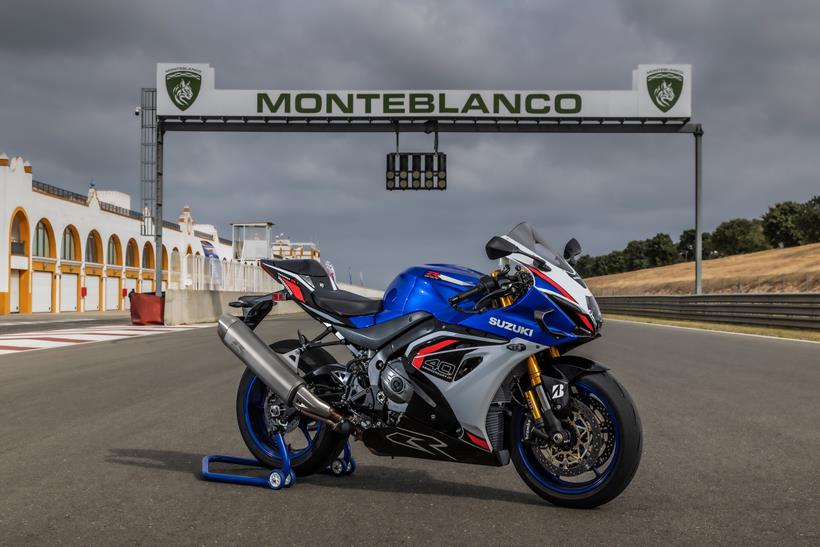
We thought that’d be the last of it… But it’s back, proudly holding up a Euro5+ certificate, but quietly admitting it’s lost a few bhp. Is this old-stager still relevant? We rode it at Monteblanco in Spain to find out.
Is the Suzuki GSX‑R1000R right for you?
If you want cutting‑edge electronics and headline‑grabbing aerodynamics, some rivals offer more theatre. But if you value real‑world speed, mechanical feel and proven race‑bred engineering, the GSX‑R1000R delivers in spades.
It’s serious on track yet surprisingly manageable on the road, making it one of the most rounded superbikes available in 2026.
Reasons to buy
+ Strong, usable power delivery
+ Superb chassis stability
+ Excellent braking feel
Reasons to avoid
– Conservative styling
– Dash feels dated compared to rivals
– Firm ride on poor roads
Engine – A little off the top
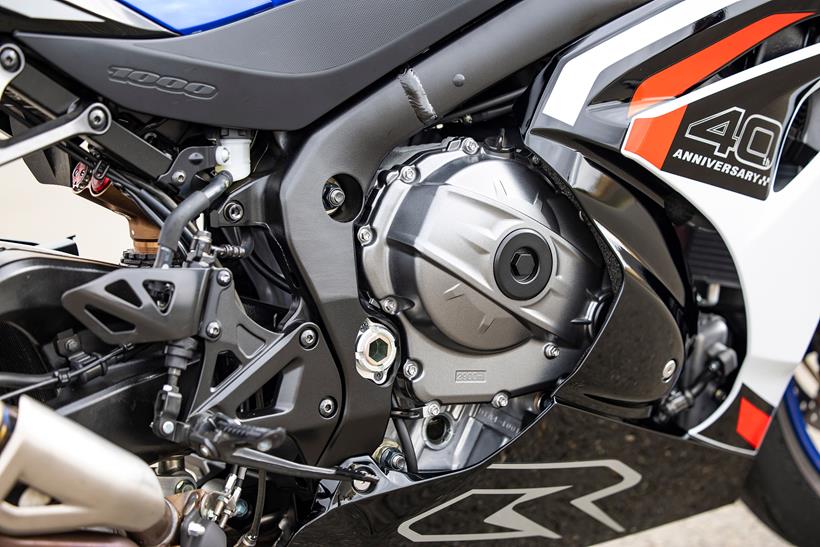
Peak power has dropped by a claimed 7bhp: the new 4-2-1 exhaust contains more environmental protection, and reduced valve overlap does the rest. Suzuki claim revised mapping improves pick-up from under 4000rpm, and it’s certainly urgent from the bottom.
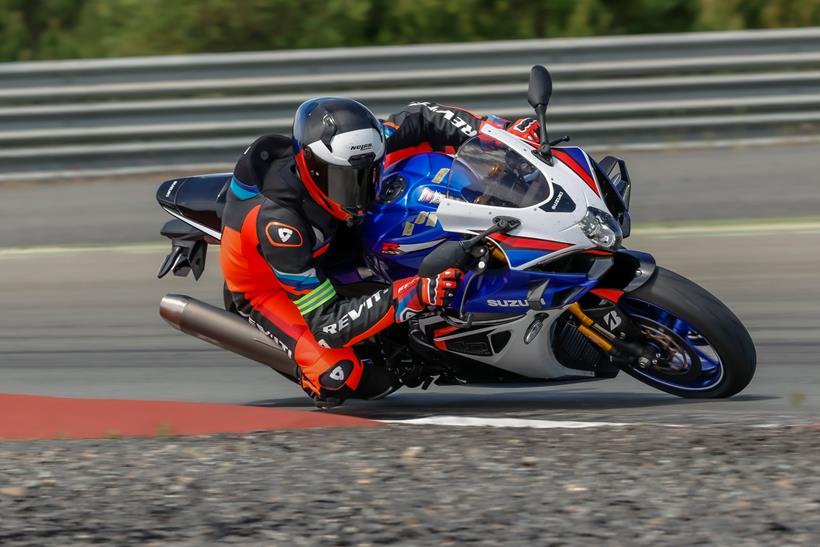
Screaming through the gears on Monteblanco’s front straight, the short-ish gearing masks the power cut up to third, but in fourth to sixth you notice it’s less willing to spin from 12,000rpm to the 14,000rpm redline. Does it matter? Only if you value the opinion of a lap timer. It’s fast enough to be exciting, reasonably effective on a track – but a little more manageable than something making 200+ bhp.
The engine is also packed with a lot of new parts to make it stronger when tuned. The crank and rods are beefed up, while the finger-follower valve lifters are reprofiled to accept different cams. Meanwhile, the cylinder head and pistons benefit from more precise tolerances, allowing tuners to raise compression safe in the knowledge that normal variances in machining won’t cause some bikes to have issues.
2mm larger throttle bodies feed the motor, while the exhaust valves have grown by 1mm in anticipation of a spicier tune blowing more spent charge across them: but for most owners, it’s an improvement without real benefit.
Electronics – digital strategy
Suzuki have updated the rider aids package: a better IMU feeds data to new algorithms that offer a finer traction control, wheelie control and ABS response for reactive safety, but there’s also lean-sensitive torque control that decides how much of the throttle opening you’ve asked for, and how much you actually get.
It’s better, but not night-and-day different. The traction control is on the conservative side until you put it on the minimum setting, which allows it to cut loose a little. The wheelie control response is tied to TC, too: it’s a shame it hasn’t been separated out for tracks with crests, as Monteblanco has: what could be a graceful, driving lift is cut off by the electronics, curtailing fun and interrupting drive.
What about those wings?
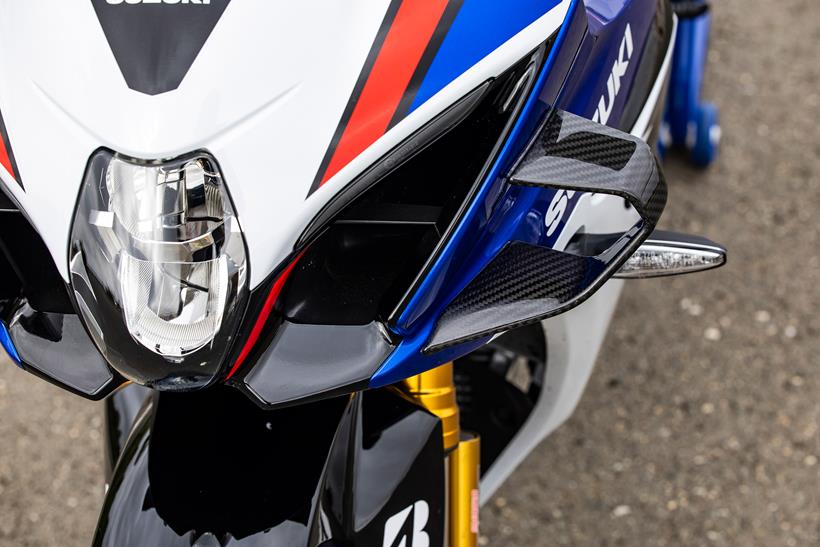
Beyond new graphics, the bodywork hasn’t changed, but four holes in the nose cone carry the new winglets. Suzuki’s engineers based them on those used on a Japanese race bike, having tried larger wings, and multiple wings on the fairing, settling on these hand-made carbon items.
They’re claimed to counter lift by 8.4%, improving stability over 60mph. Do they work? Hard to tell: the GSX-R retains a tendency to shake its head accelerating hard in the lower gears over bumps, but you’d have to ride it with/without back-to-back to truly determine their effect.
Suzuki take a lot of pride in their record in world endurance racing: they’re probably more for Yoshimura SERT’s benefit than for you or me.
Braking improvements
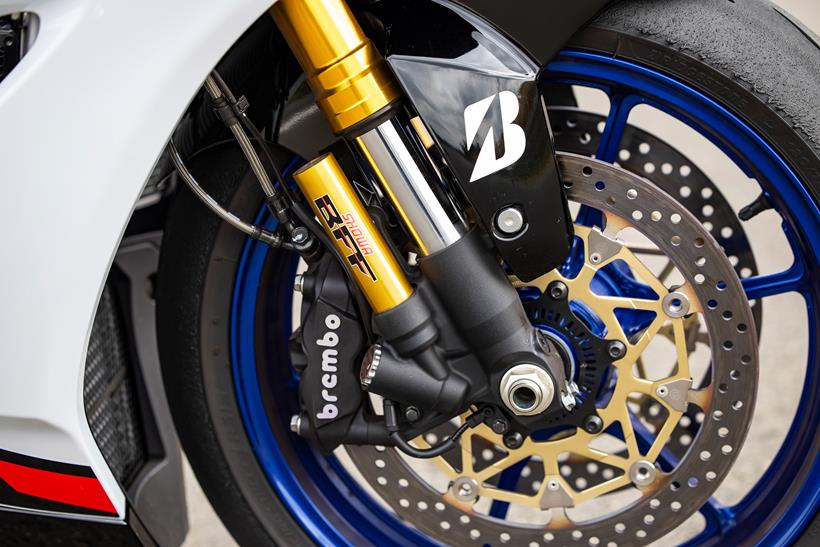
The Brembo calipers on the 2017-2022 bike were hamstrung by ABS that robbed some feel through the indirect connection, and a response that cut power way too early for hard riding, and then failed to return power as soon as you’d like when barrelling towards a low-gear corner.
With no ‘official’ function to turn it off: only pulling the fuse for the pump would let you control your own stopping. Software and hardware changes have improved matters, but it still cuts in early, though the more subtle modulation of pressure maintains more stopping power, and it can return full power more readily. But it’s a long way behind any European system, or that of the Honda CBR1000RR-R Fireblade SP.
Where the GSX‑R fits in
At £17,599 OTR, the GSX‑R1000R isn’t the cheapest model in today’s superbike market. Kawasaki’s ZX‑10R comes in at £15,999 (plus OTR), but once you factor in on‑the‑road costs the gap narrows, and the Suzuki counters with a more polished electronics package and road‑focused refinement.
At the other end of the spectrum, Honda has pushed the Fireblade firmly upmarket. Now sold only in SP trim at £23,699, it’s a premium, track‑biased proposition with a price tag to match.
BMW’s S1000RR theoretically opens at £18,050, but that figure is almost academic. In reality, most buyers tick the options boxes – Dynamic Package, billet extras, forged wheels – and suddenly you’re comfortably north of £20,000.
The GSX‑R delivers genuine litre‑bike performance without forcing you into the £20k-plus bracket. It may not be the flashiest machine in the class, but pound‑for‑pound, it’s one of the most rational ways into modern superbike ownership.
MCN verdict – ‘It still has a place’
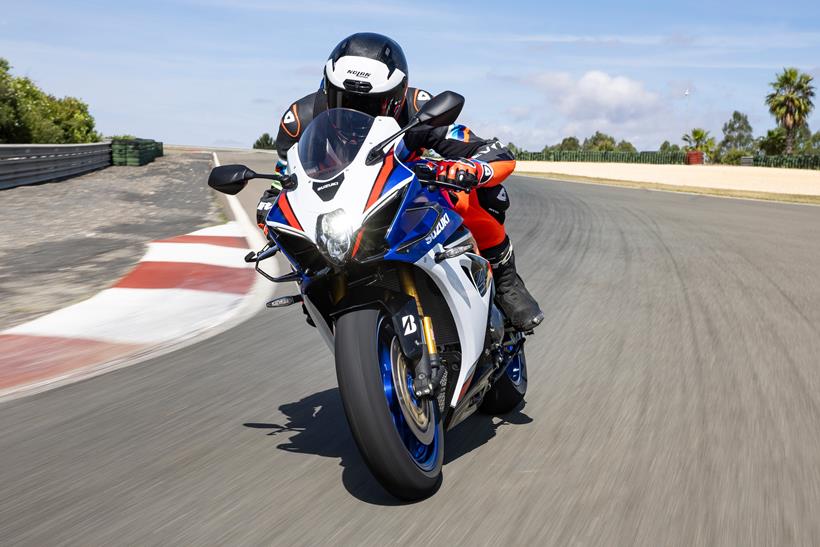
The changes to the GSX-R have subtly improved it in places, and the drop in power isn’t apparent in isolation: it still delivers litre-bike thrills.
It is behind the times in a number of cold, objective regards: it won’t match the performance of just about every rival, but it still has a place on the market – possibly more so, as rivals get ever more expensive, and more difficult for ordinary riders to ride and – most crucially – enjoy.
A normal trackday rider can hop on the Suzuki and feel like they’re working it, where the BMW and Ducati operate on such a high plane, it’s hard to feel like you’re doing them any justice.
Watch our in-depth Suzuki GSX-R1000R video review here

Deja una respuesta