
2026-on Ducati DesertX review | Ténéré rival or desert drama

Ducati DesertX expert review
Ducati has somehow managed to seamlessly spread its new Desmo-free V2 powerplant throughout the entire middleweight range. The super-versatile 890cc twin features variable inlet valve timing and comes in various tunes across the fleet, which includes the Panigale V2 S, Monster, Hypermotard V2 SP and Multistrada V2 S.
With a claimed 110bhp, the new DesertX adventure bike certainly feels less fruity than its sportier, more road-biased V2 family members, yet it’s not short on thrills and uses its versatile characteristics to extract the best in adventure form. Ducati says this isn’t just an engine swap, which is a good thing, as the old motor wouldn’t fit in the DesertX’s all-new chassis.
Like this story? You can get more MCN in your life by clicking here and asking Google to make us a preferred source.
Is the Ducati DesertX right for you?
Reasons to buy:
+ Vastly improved engine performance and usability
+ Excellent road and off-road capability
+ Better comfort, practicality and owner benefits with larger service intervals
Reasons to avoid:
– Expensive compared to rivals
– Touring comfort improved but still not amazing
– Poorer fuel economy compared to rivals
As we left the launch hotel and hit the highway, Ducati’s homework was palpable. The original DesertX had a plethora of fans, rightly so, but as soon as the roads opened up and higher speeds were a necessity, its wind protection – or lack thereof – was a literal headache caused by turbulence.
Wearing exactly the same adventure helmet as I did riding the old bike, the new front fairing and screen make exuberant motorway speeds considerably more tolerable, as does the new engine.
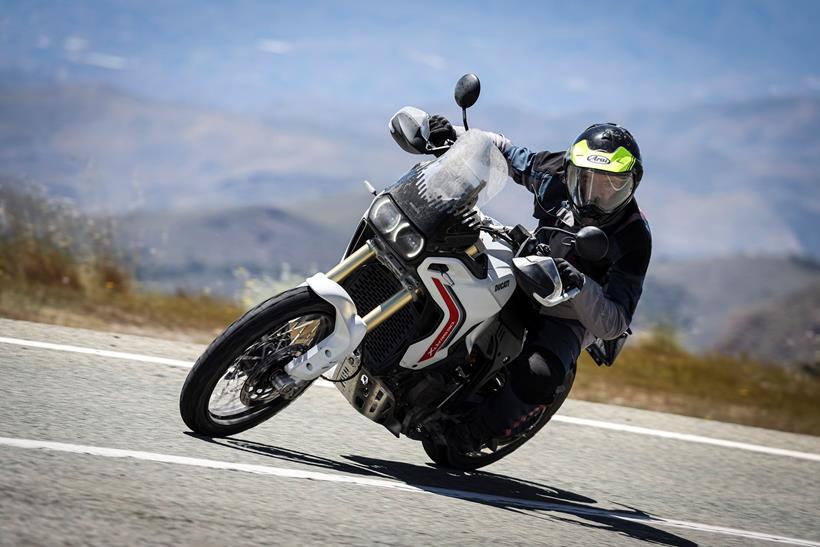
The V2 feels less stressed in taller gears than the previous DesertX and is also not as fussy on gear selection thanks to the wide rev parameters. You can go as low as you dare with the revs, and there’s no chain clattering or judder, just a silky smooth delivery.
Conversely, higher revs are rewarded with an enthralling top-end and airbox-induced soundtrack. With the lack of Desmo internally, there’s no doubt some of the quirky character and a smidgen of soul have left the chat, but it is offset by a buttery-smooth execution wherever you are in acceleration. The overrun pops and gargles are also a welcome addition.
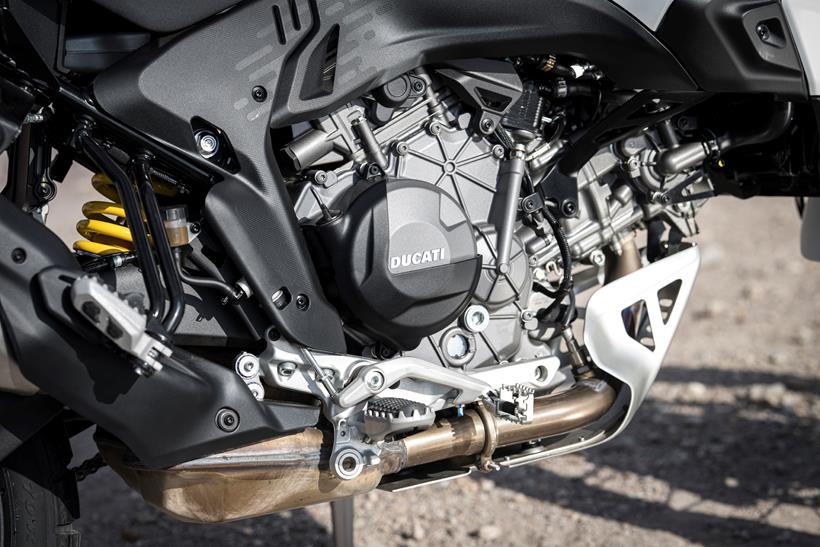
Much of the morning ride was off-road: not just your token gravel roads for the chance to grab some frivolous launch photos, but technical, sometimes challenging pistes that required serious mental fortitude.
Even for the most experienced pilots, it can take a while to get fully accustomed to a new bike on tricky terrain, but the DesertX felt like a willing companion instantly; no shakey moments, no surprises, no hesitation. Just surefooted compliance across an onslaught of terrain.
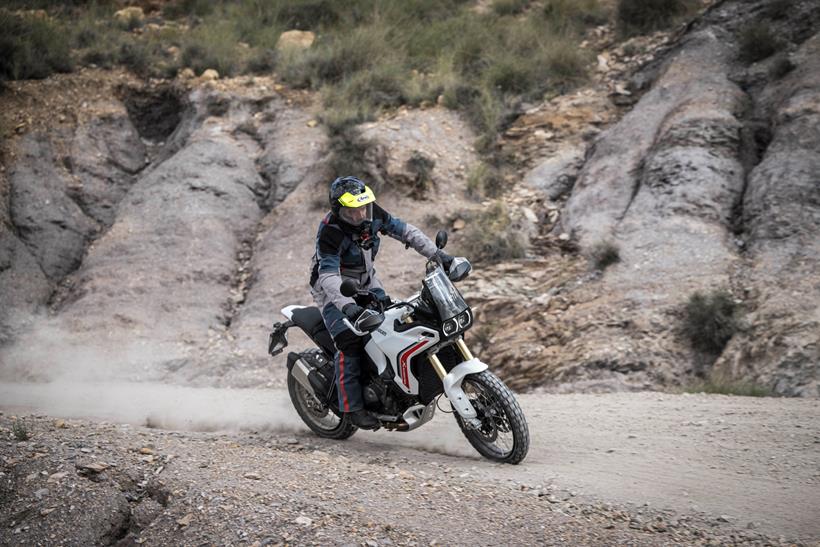
We were running the standard-fitment Pirelli Scorpion STRs, which are excellent dual-sport tyres but come with obvious compromises at either end of the terrain spectrum, yet sniffing out grip wasn’t a problem on the DesertX, even on rocky trails and sandy sections.
In my experience, the only bike that effortlessly glides from one terrain to the next is the previous Yamaha Ténéré. Now, the new DesertX is very much on par with the Yamaha, belying its weight with a supernatural balance. My only concern at varying points throughout the day was switching between rider modes and ensuring the bike had the required settings to excel in each environment.
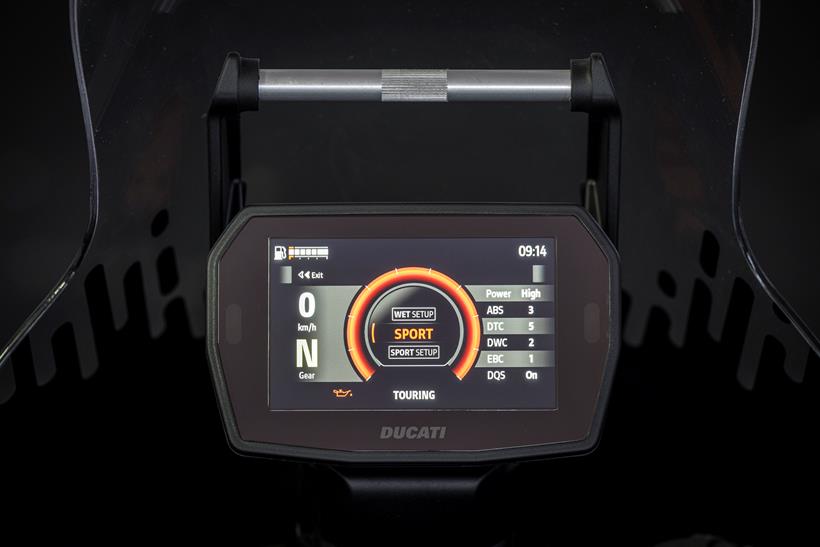
Off-road modes and throttle maps on adventure bikes are largely castrated, power-sapped offerings, and quite often you experience a vague sensation to the rear wheel connectivity. Not with the DesertX. The ‘Off-Road’ throttle setting culls power to a mere 75bhp (because none of us need 110bhp on the dirt) and boasts a wonderful connection that allows you to feel for grip with every throttle increment.
The confidence-inspiring heroics translate to the tarmac, too. The chassis flattens the tyres, forcing them to grip off-road; that abundance of mechanical grip can also be felt on the black stuff. Given the tyres fitted, its sporting ability shines through immediately, and the big, wide ‘bars offer immense leverage.

Previously bereft of a shock linkage, there’s now a full floating progressive link and shock arrangement at the rear – that along with a plusher suspension stroke at either end – has added fluidity to the ride.
Aside from slightly wooden brakes, the DesertX is near faultless on the road dynamically, and, as with all the V2 models, this new DesertX is easier to ride than its predecessor.
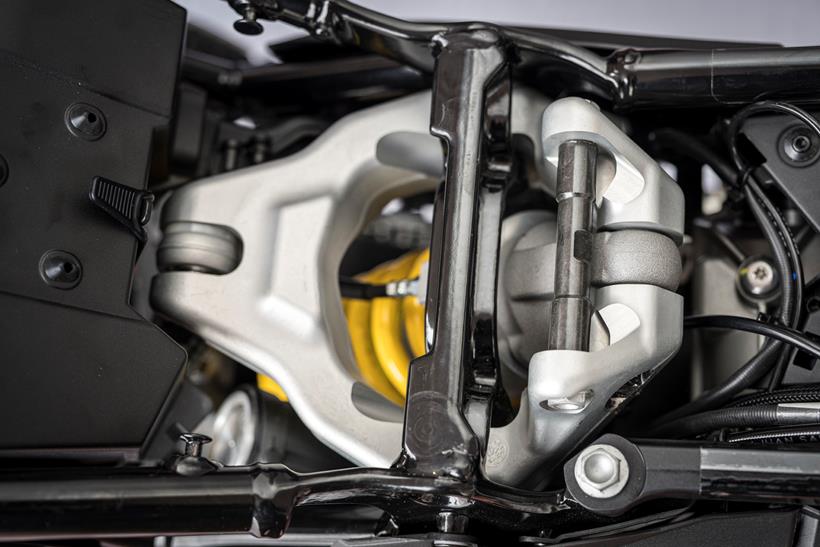
Tech detail – Feast Your Eyes
Torque the torque
You can access 70% of the DX’s torque from 3000rpm. Ducati reckons oil changes are required every 10,000 miles or two years, and valve clearance checks recommended every 28,000 miles

Look at me…
Despite looking like they’ve been robbed from an XT350 in the 1980s, an honourable mention must go to the mirrors. Ducati isn’t known for designing functional mirrors, but these offer crystal-clear vision and stability.
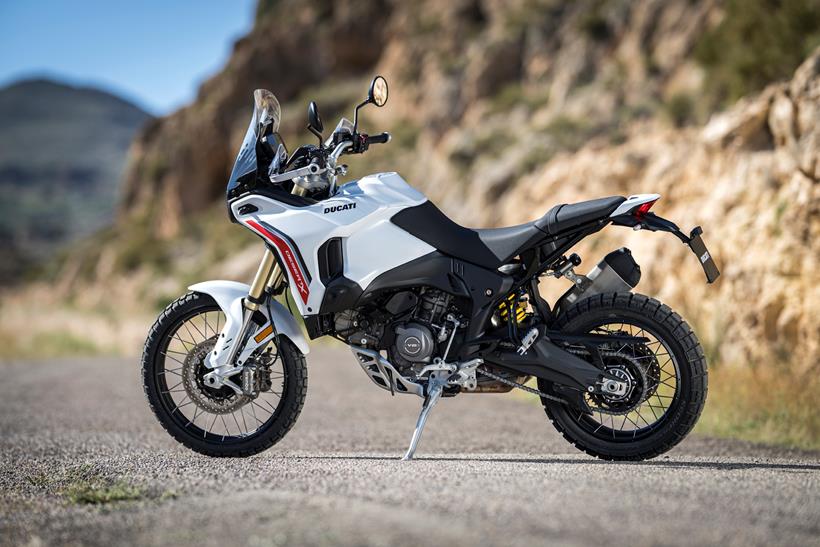
Listen up
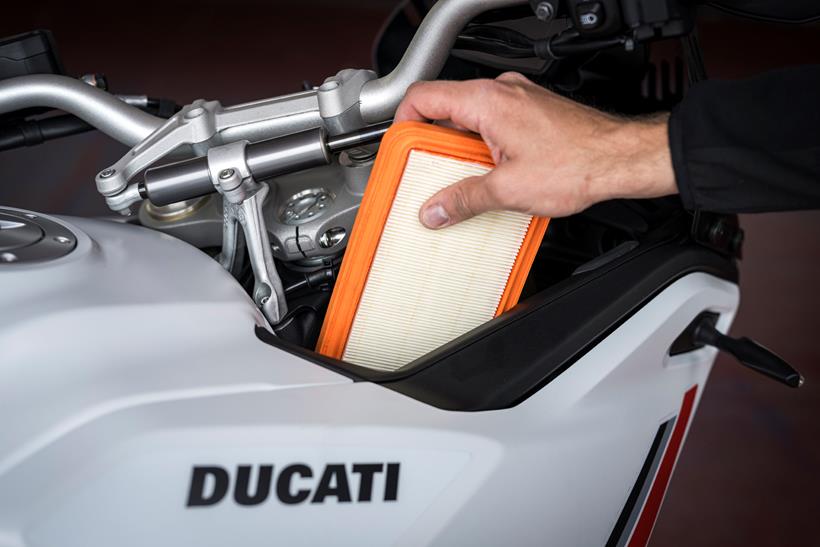
Ducati took advice from owners and made it much easier to access the air filter for the trail riders’ brigade. It’s still a paper filter, but at least you can get to it relatively easily. There’s also a hex nut for the rear wheel spindle.
MCN Verdict
There’s no doubting the DesertX’s aptitude on and off-road, and if you’re looking for a do-it-all middleweight adventure bike, it’s a must-ride option.
However, there are questions over its touring ability. If mile-munching on open roads is your thing, I’d look elsewhere, as it’s not the comfiest, and 126 (GPS-tracked) miles from an 18-litre tank isn’t exactly a frugal return, although much of the ride was flamboyant, to say the least.

Considering the price, you’ve got to really want a Ducati when you weigh up its rivals. For a limited time, there’s a ‘special’ launch price of £14,995, which is still nearly five grand more than the equally gifted Yamaha Ténéré. That said, this is a very special motorcycle.
Deja una respuesta