
2026-on Triumph Thruxton 400 review
Triumph Thruxton 400 expert review
The designers at Hinckley have been doing a sterling job in spawning a whole family of models from the perky, pint-sized Speed 400 platform. In addition to the standard modern retro, we’ve had two different Scrambler X and Scrambler XC, and the groovy new Tracker 400, so to round off the gang, they’ve resurrected the hallowed Thruxton moniker for a lightweight take on the classic café racer.
It’s a title that’s been bestowed upon Triumph’s high-performance Bonneville twins since the early sixties, so how exactly does this entry-level single-cylinder machine measure up to wearing the badge?
Like this story? You can get more MCN in your life by clicking here and asking Google to make us a preferred source.
Is the Triumph Thruxton 400 right for you?
Reasons to buy:
+ Striking café-racer styling that turns heads
+ More flexible and engaging engine than its siblings
+ Stable, confidence-inspiring handling with decent grip
Reasons to avoid:
– Limited adjustability across the bike’s settings
– Soft initial front brake bite hampers confidence
– Can feel wrist-heavy and is more expensive than its siblings
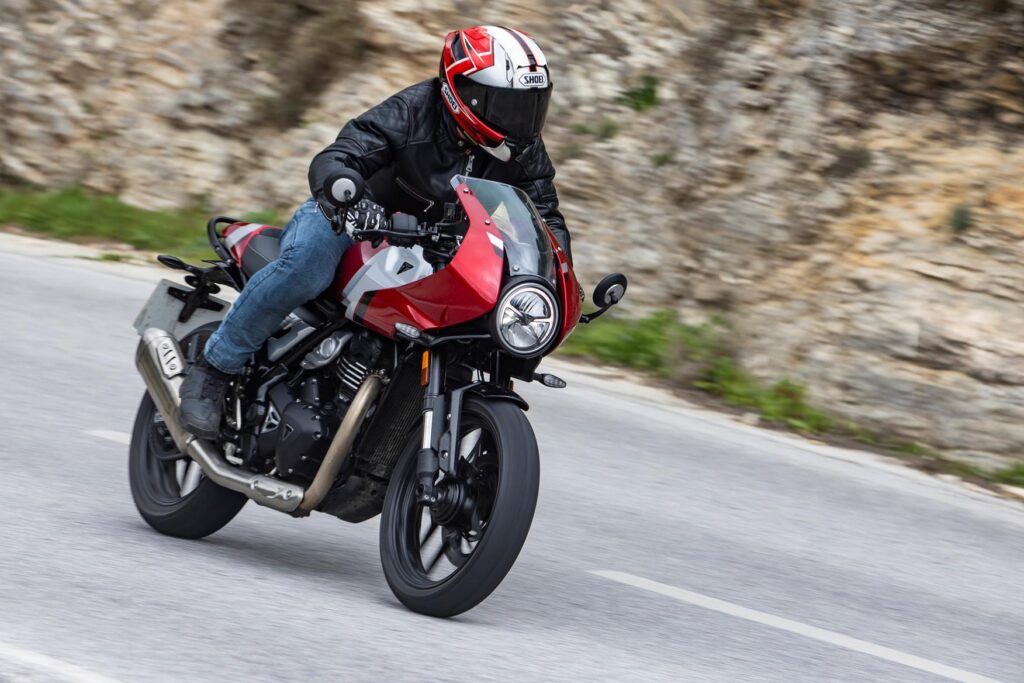
There’s no denying that the Thruxton 400 certainly looks the part. Up front, the cockpit is enshrouded by a stylish bikini fairing, which bears more than a passing resemblance to the short-lived but fabulous-looking Speed Triple RR.
Tucked neatly into that is the ‘family’ face, a single circular headlamp with twin LED DRLs, and the whole assembly flows into a narrow, Manx-style fuel tank with deep knee cutouts and a classic Monza filler cap.
Bar-end mirrors poke out at either side, attached to a pair of clip-ons, and a body-colour-matched cowl transforms the one-piece stepped bench seat into a sporty solo unit. It’s all beautifully executed, so whether you’re rolling into Hoxton Square, cruising along Brighton seafront or pulling up at Devil’s Bridge, it’s guaranteed to turn heads.
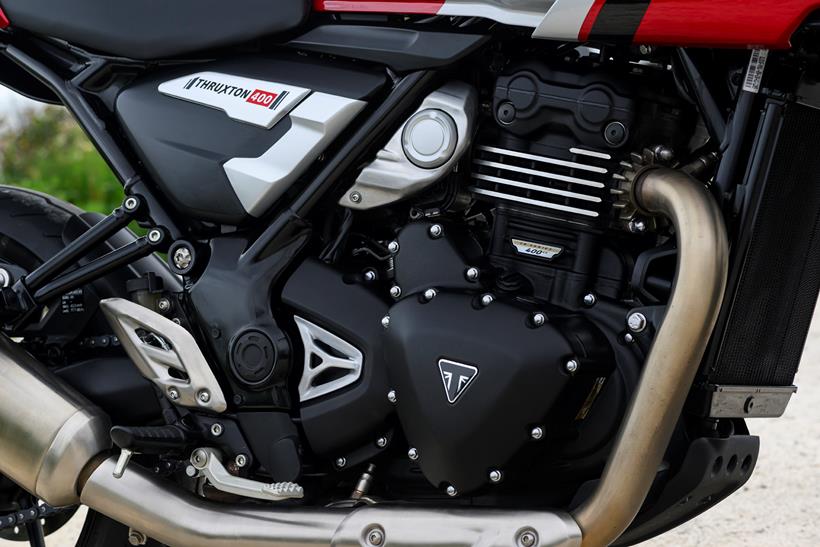
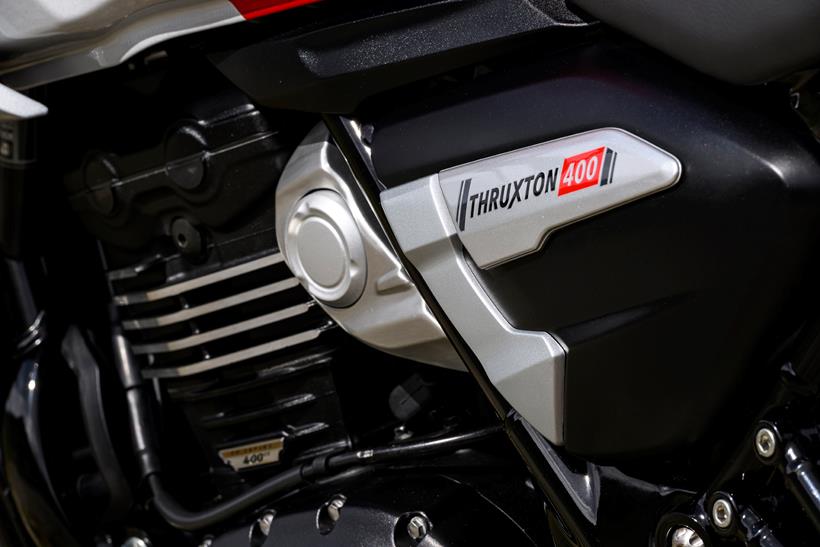
Getting the aesthetics on point is one thing, but there’s more to the Thruxton than a sharp vintage suit. While the tubular steel frame is common across the 400 range, it has been treated to a fettled version of the 398cc liquid-cooled TR mill that now pushes out 41.4 bhp, 5% up on its Speed and Tracker X siblings.
It’s a subtle boost, achieved by a new inlet camshaft and retune of the ECU to suit it, but enough to alter the engine’s characteristics and make it feel more flexible and fun. An extra 1,000 rpm headroom at the redline gives you licence to use more of that power, which Triumph say they’ve capped at a sweet spot, rather than targeting the 47bhp A2 licence limit, to prevent it feeling peaky.
Fuelling is measured and accurate via the ride-by-wire throttle, and there’s plenty of pull from just below 3,000 rpm, right through to 9,000 rpm. There’s a small, but noticeable, step up in delivery about halfway through that range before the vibes start telling you to change gear.
That’s not to say that it can’t handle higher revs, just that the engine is happiest when it’s at its punchiest. There’s a pleasing pop-pop-pop from the exhaust too, which seals the deal as far as retro authenticity and personality are concerned.
The easy-going slip and assist clutch is unchanged, and that’s fine, because action at the lever is already light and predictable. Shifting between gears is an ‘old school’ mechanical process (no quickshifter here), with a positive clunk as each ratio engages.
A slight omission is a lack of span adjustability for either lever, so for riders with smaller hands looking for manageability, it’s something to bear in mind.
Performance on paper is identical to the equally new Tracker 400, so apart from looks, is there anything that sets the Thruxton apart? Well, yes, thanks to a tweak in the geometry department and rethought rider ergonomics, it feels significantly different to ride, and that’s where it can lay some claim to the famous name.
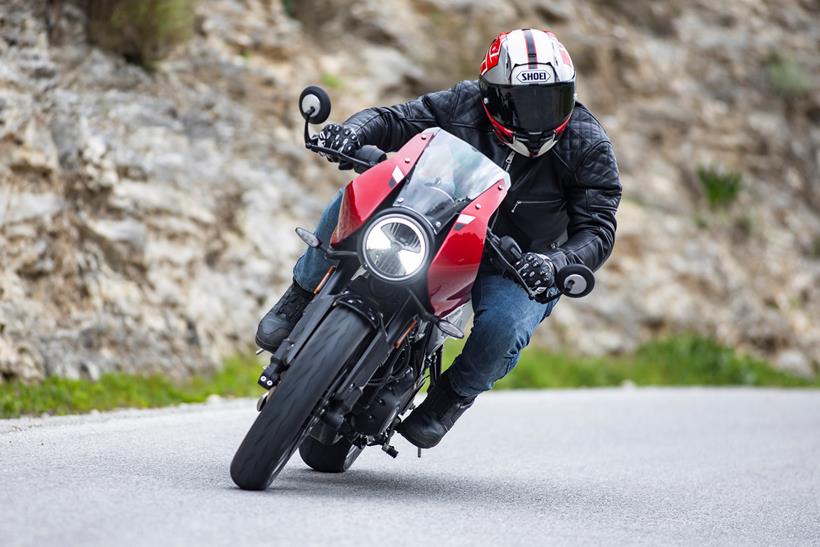
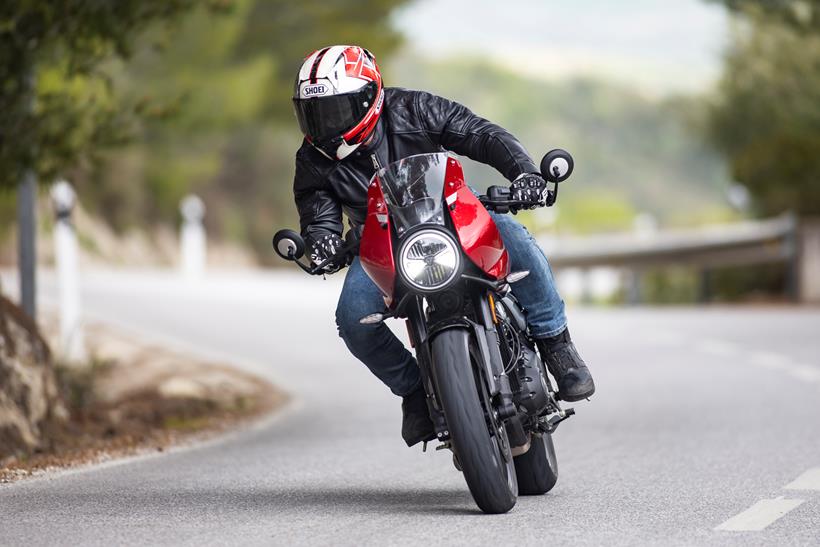
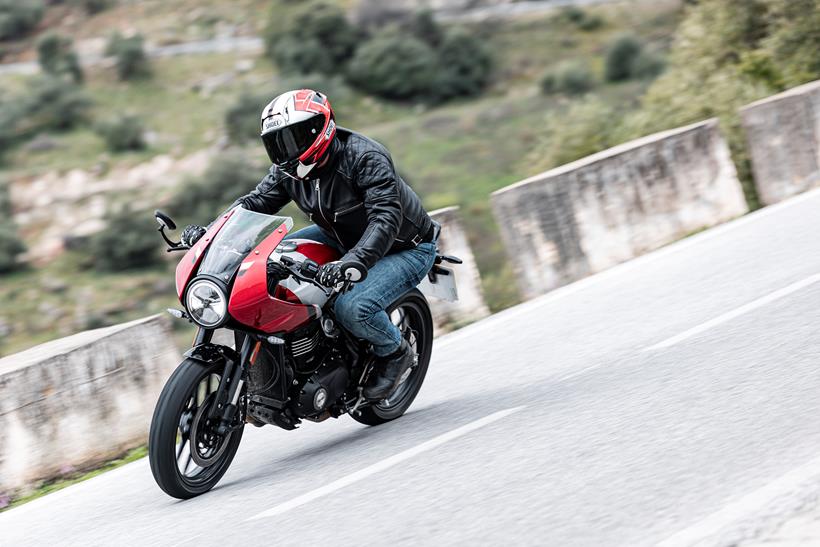
A change in how the forks are offset in their yokes, plus a reduction in travel, gives the Thruxton a longer wheelbase and less trail. We’re only talking a few millimetres, but that combines with the low, narrow clip-ons and sportier riding position that naturally dictates to make the chassis feel longer and lower, as a result, more stable and composed.
More weight over the front wheel gives a firmer sensation to the forks, and it takes more effort to tip into a turn, but wherever you point it, the Thruxton inspires confidence by staying planted. And there’s no issue with grip, as the Pirelli Diablo Rosso IV tyres suit the Triumph down to the ground. Literally.
Feast your eyes
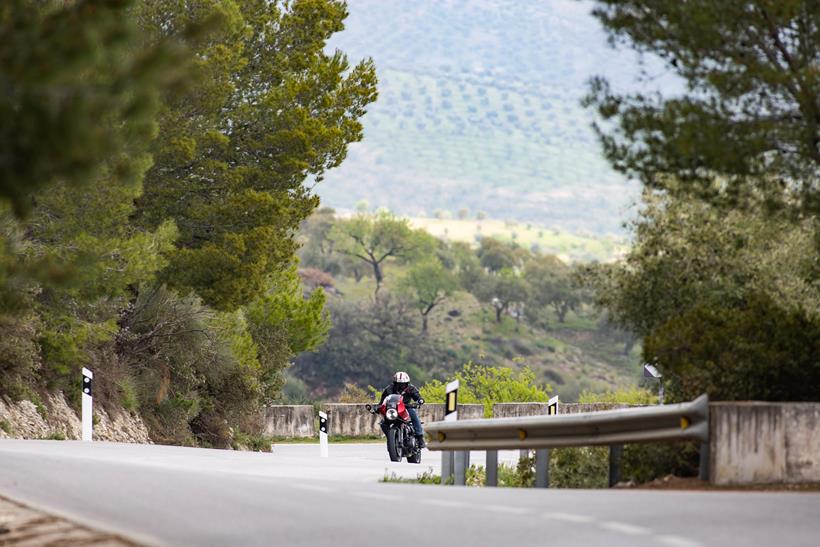
What’s in a name? It’s a bold move slapping the name originally reserved for factory race bikes on an entry-level machine, but the baby Thruxton wears it well as Triumph’s ‘sporty’ 400.
Braking news
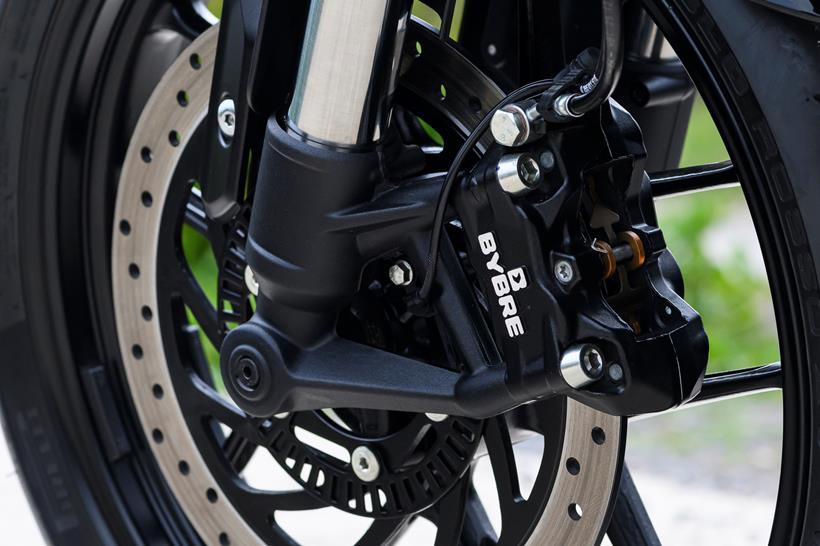
A four-piston Bybre radial caliper gives the Thruxton plenty of stopping power; however, it does need a good squeeze at the lever as the initial bite is rather soft.
All tucked in
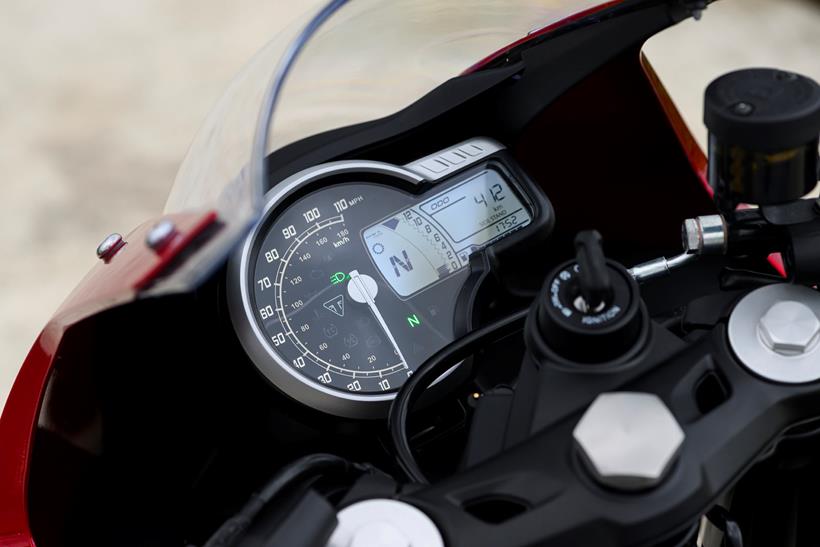
The analogue speedo looks the part, with a handy LCD gear indicator. And there’s just enough room to duck down behind the screen if you lie on the tank.
MCN Verdict
Let’s be clear: the Thruxton 400 isn’t a hopped-up factory-tuned version of the firm’s A2 licence-friendly range – but it does a grand job of masquerading as one. Much like its closest sibling, the Tracker 400, Triumph have done a fantastic job of making it feel completely different to ride by effecting some minor adjustments to chassis geometry, changing the seat height and fitting different bars.
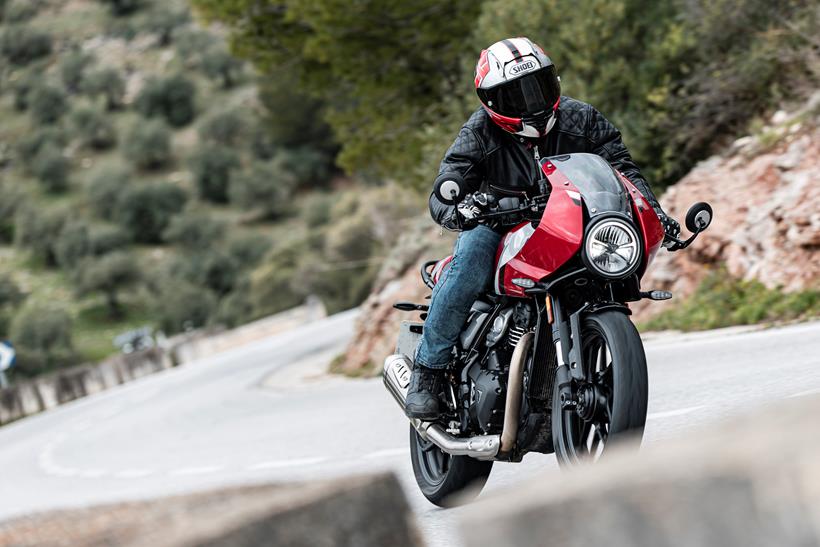
The forward reach to those low-mounted clip-ons gives you the sensation of riding on, rather than in, the Thruxton, which, along with the stable handling, adequately conjures up the illusion of a true café classic. It can feel a bit ‘wrist-heavy’ around town, but get on the twisties, and that soon disappears. At £5,995, it’s £750 more than the Speed and £250 up on the Tracker; however, if you’re sold on the looks, that isn’t likely to be a factor.
Deja una respuesta