
Enter the world of adventure
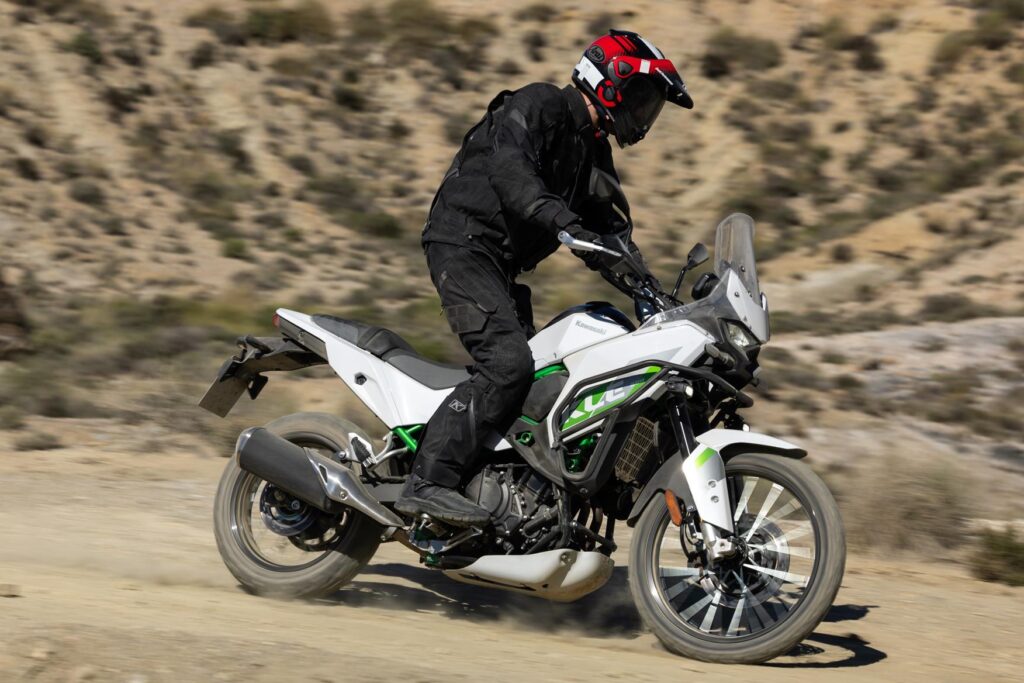
Kawasaki KLE500 expert review
Simplistic, affordable and manageable adventure biking is becoming bigger business by the year, yet until today the only Japanese offering that delivers true on/off-road travel capability is the Honda CRF300 Rally. Now Kawasaki are rejoining the party with their all-new, third generation KLE500 to compete with the predominantly Chinese and Indian-built options crowding this particular niche.
Kawasaki’s marketing puff says ‘Life’s a Rally – Ride It!’, but the design brief is a bit more sedate. It’s built for riders looking to make their first foray into adventure riding, not those hoping to emulate Kevin Gallas or Pol Tarres…
Like this story? You can get more MCN in your life by clicking here and asking Google to make us a preferred source.
Is the Kawasaki KLE500 right for you?
Reasons to buy:
+ An approachable, confidence building ride
+ Genuine dual-sport capability
+ Everyday practical and good value for money
Reasons to avoid:
– Limited ground clearance when covering more technical terrain
– Lacks excitement, or standout character
– A few turbulence-related tweaks needed to make it touring-ready
Kawasaki KLE500 handling, ride quality and brakes
Our first ride is on the SE model. For £600 over the standard model, you get a TFT dash (nicer looking, though the only practical benefit is a fuel range readout), a full alloy bash plate, metal-framed hand protectors, a USB port in the fairing and LED indicators.
My initial response after the first 90 minutes of riding is lukewarm: while nothing jumps out as really poor, nothing jumps out as a real USP – a reason to pick the Kawasaki from a dozen or more potential rivals.
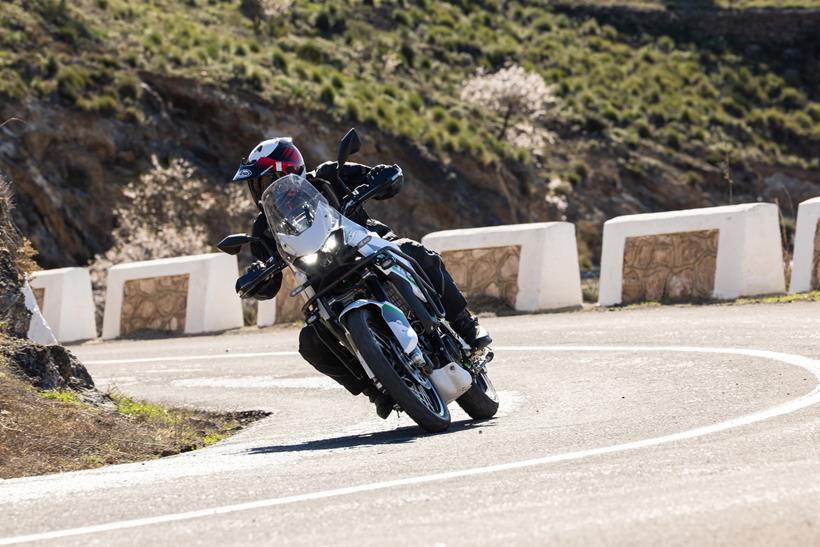
Online vitriol flooded Kawasaki’s social media accounts when the first promo video went live. Armchair experts spotted how often the low-slung undercarriage got close to bottoming over lumps and jumps. And it’s true – clearance is way below what most rivals offer.
The upside of that is a low centre of gravity, which lends a feeling of stability, security, but not super-agile handling on the road, nor goat-like ability to pick a line on the trail. It’s all very safe and not immediately exciting, where rivals like the CFMOTO 450MT, KTM 390 Adventure R and Royal Enfield Himalayan offer a bit of verve from the off, in their own ways.
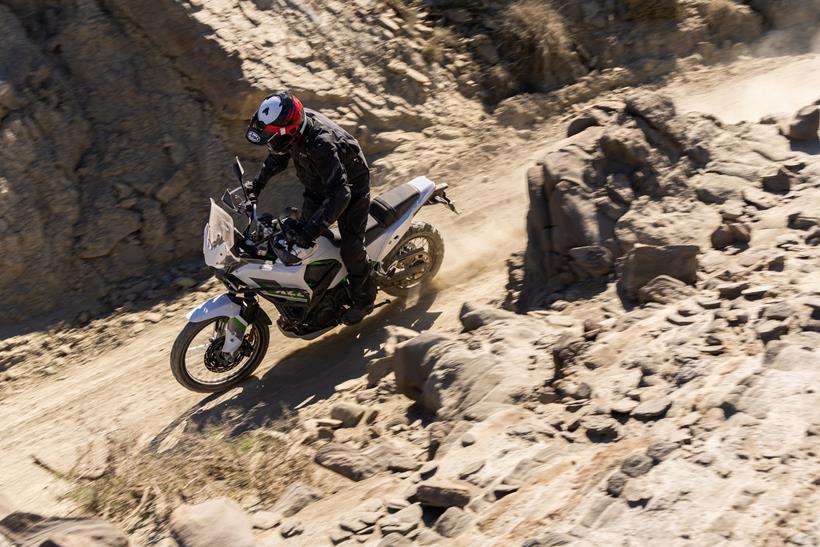
On the dusty trails of Andalucia, I’m not expecting much from what initially presents as a staid light tourer/commuter in an adventure dress, but the KLE puts its 50/50 IRC Trail Winner tyres to work finding a surprising amount of traction, while the KYB’s basic design does a commendable job of handling TET-style trails with some reasonable rocks and ruts simply sucked up and traversed with no wobbles or jolts.
The standover position is good, too – narrow between the knees, well-placed bars that are perfect for shorter/average height riders, and perfectly tolerable for a six-footer like me. The footrest rubbers are easily removed without tools, stashed under the pillion seat (there’s actually a little storage space under there, incidentally), and the teeth of the steel pegs hold my boots firm.
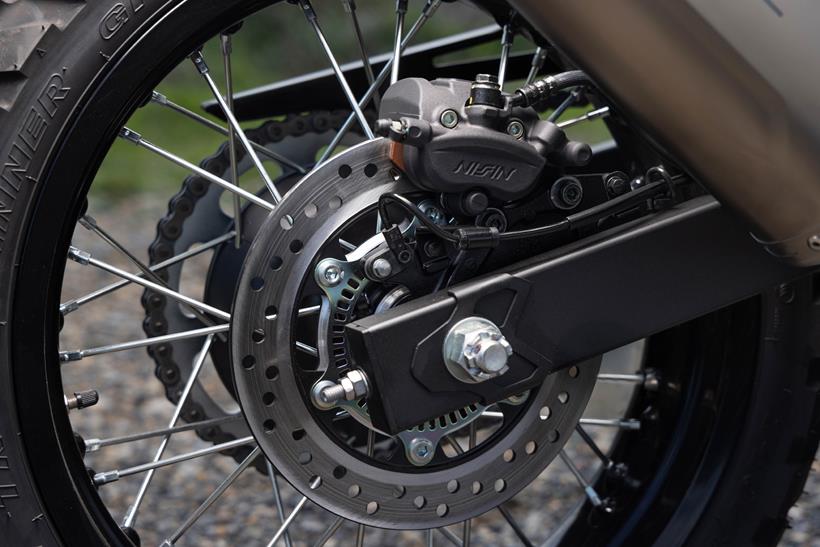
ABS is easy to fully disengage, too. Riders in the 5’6” range report the tall-sounding seat is heavily offset by the slim waist, and both feet reach the ground at least in part, aiding confidence when a dab is needed.
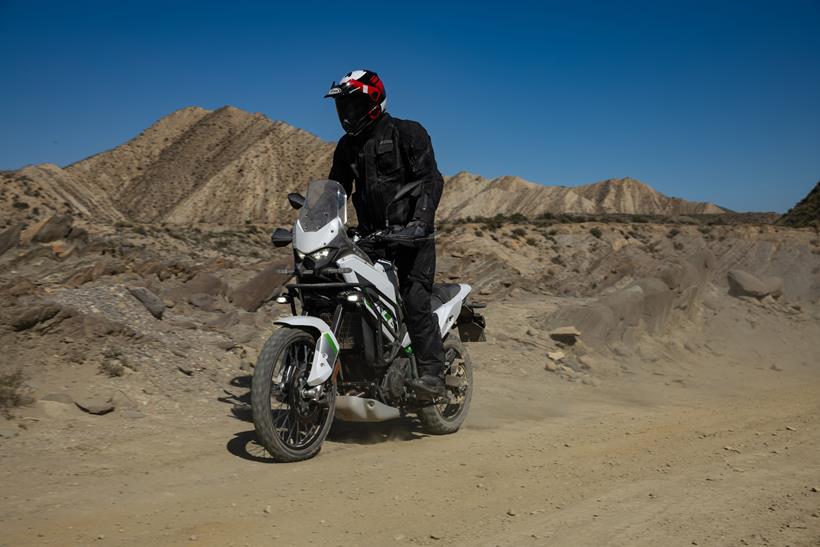
It takes a while to trust it, given it doesn’t present as a sporty bike, but the KLE can be pushed along these trails with a bit of gusto. The slightly fluffy response and wide spread of power gives the pull you need for most things, with little risk of spinning the rear and frightening a burgeoning rookie adventure rider. It’s no enduro bike, but the chassis handles scenic, sensible trails just fine.
Back on tarmac, now a little more attuned to the Kawasaki’s subtle attributes, I begin to appreciate it more on remote, quiet twisties. Again, it’s no sharp-steering racer, but it’s accurate enough, and so easy to ride with a bit of spirit.
The suspension is on the softer side, but it’s controlled enough to bend-swing and enjoy bopping along in the Spanish sunshine. The IRCs hang in there on dry, warm and clean tarmac – whether they’ll be as drama-free on greasy winter roads back home remains to be seen.
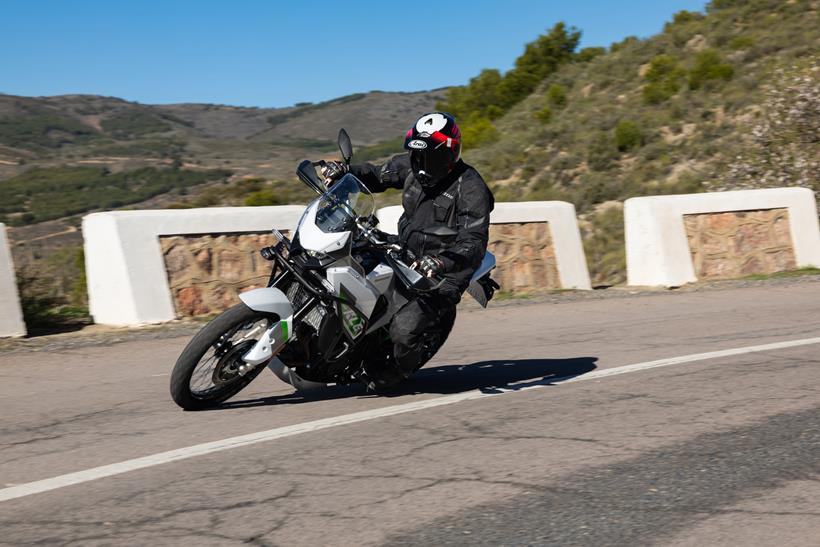
A stint on dual-carriageways raises a few questions about its touring credentials. While it’ll hold 70mph (and a bit more) with ease, some of the bikes exhibited strong vibrations through footpegs and handlebars, while some were fine.
It’ll be interesting to see if full production bikes do the same (our test bike was early pre-production, with some minor details not finished). Hopefully the good ones are representative of the finished article.
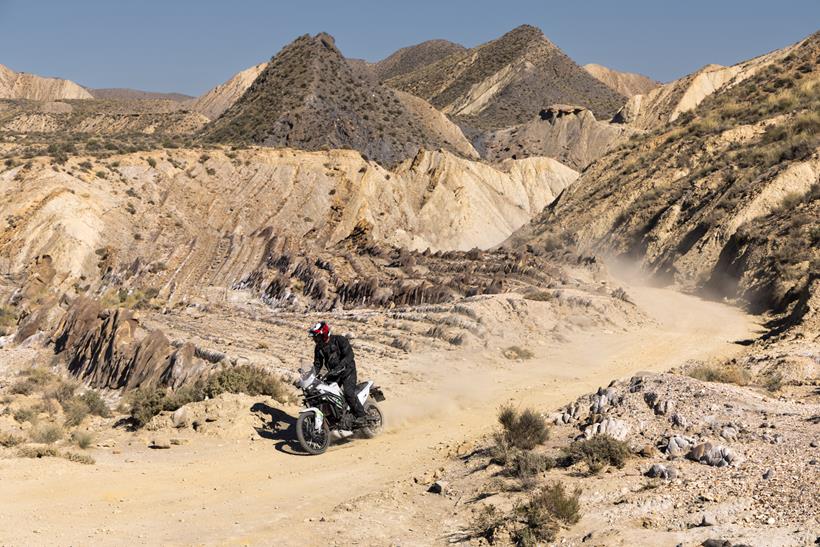
Later at the launch, Kawasaki cut us loose to make our own way back to base, a media cohort and I searched out more ambitious trails, finding a bit more technical single track to play on.
Here, we find the Kawasaki’s limits. Predictably, it’s ground clearance – but only when we encounter big rocks and slabs to traverse. It settles on the skid plate regularly, but the optional crash bars prove great for manhandling the bike through as a pair…
Anywhere else, the Kawasaki pushes through, finding grip with no need for traction control (which it doesn’t have, so just as well), suspension doing its thing. It’s truly impressive: if you stick to the mud, gravel and grass of the British byway network and avoid the rockier routes it’ll get through most things with a safe, nurturing kind of confidence that’s perfect for the typical customers. Ex-enduro riders need look elsewhere – but it’s a great introduction to proper adventure riding for everyone else.
Kawasaki KLE500 engine performance
The 451cc engine is from the Ninja/Z500, unchanged barring ECU mapping tweaks, but the rest is a new production: they didn’t just add off-roady running gear to a road bike frame, as some have done in the past.
Purpose-built, if-basic, KYB suspension, a 21in front wheel and 17in rear hang from steel trellis built for the KLE. Performance figures are 44bhp/31lb.ft/195kg, while practicality numbers are 16-litre fuel capacity, and an 870mm seat height.
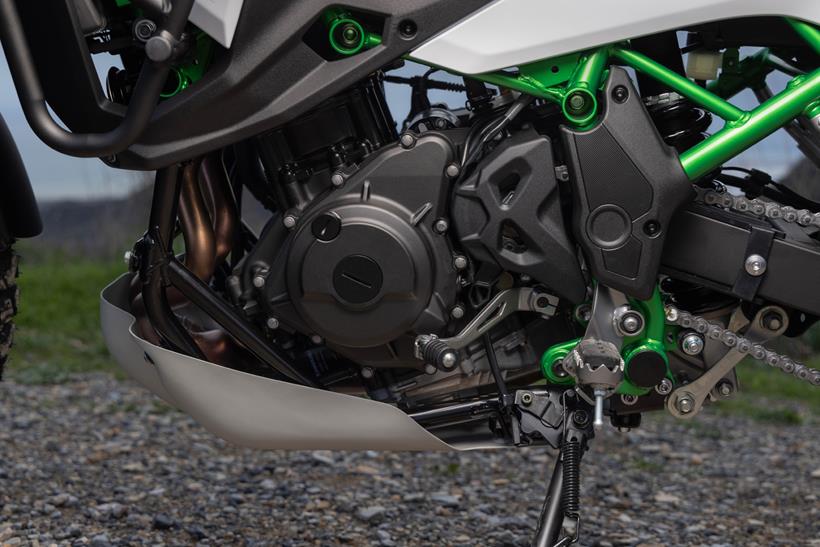
The engine is respectably flexible and efficient, but the 180-degree firing order and flat power curve means it just gets through each of the six gears with little fanfare.
It’s straightforward forward motion with no real pizzazz. The gearbox is slick, the slipper clutch smooths downchanges nicely, but there’s no quickshifter to add a sporty edge to changes.
Kawasaki KLE500 reliability and build quality
We wont know for a while the KLE500’s overall reliability being so new to the market, but we can look at the owners’ reviews of bikes that share the same engine platform: the Kawasaki Z500 and Ninja 500. With almost five stars across the board for each bike, that should provide some confidence that the KLE will treat you well.
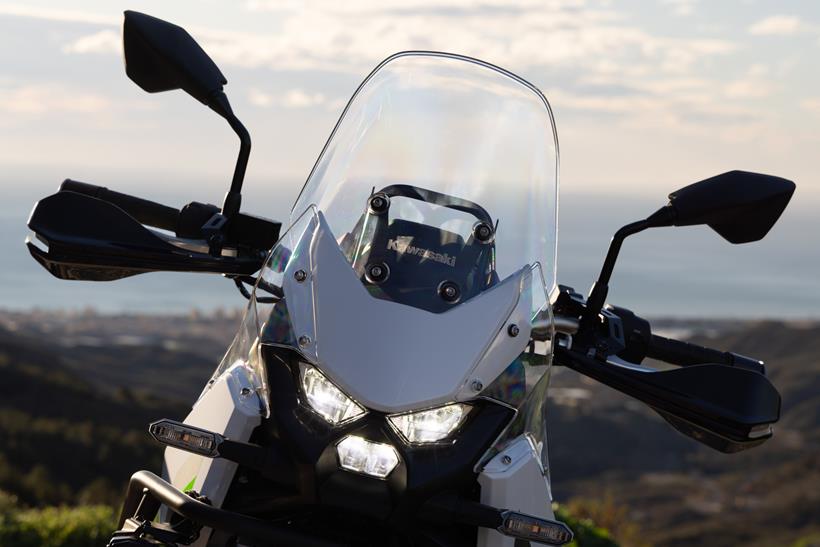
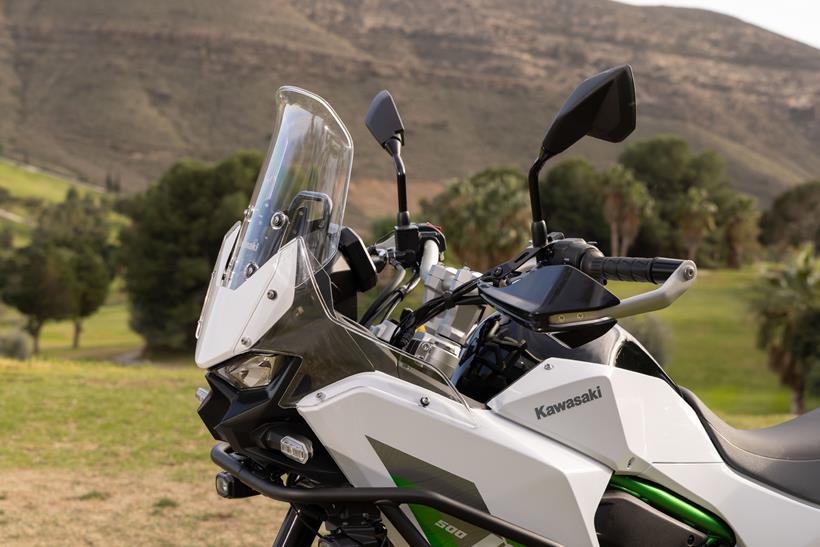
However, when getting into the detail on the KLE, my main gripe was the taller SE screen: the turbulence it generates reaches a high frequency at 60mph that sent vibes through my helmet, to the point I couldn’t read the numberplate of the bike in front.
It’s adjustable, but only with tools. I tried it again, moved to the highest positon to lessen the turbulence, but it wasn’t a total fix. I suspect – counter intuitively – the shorter base model screen might generate less turbulence and be more comfortable overall, for the penalty of sitting in the wind a bit more.
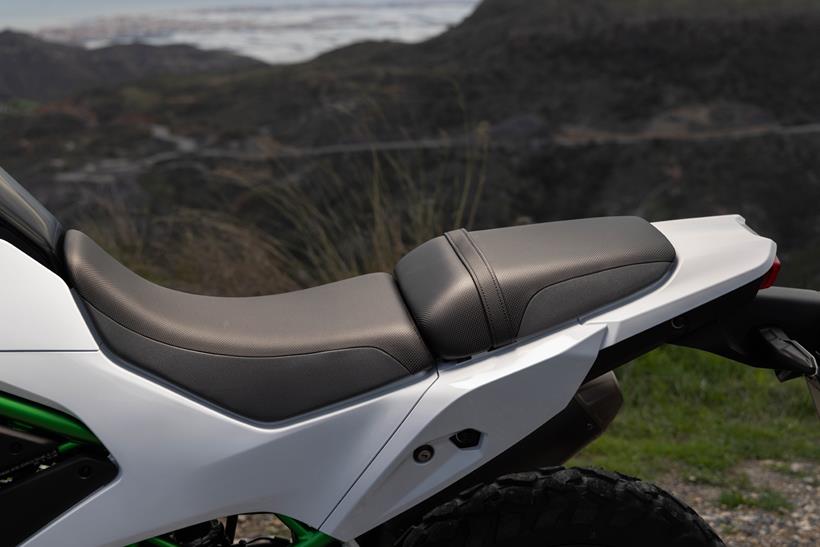
It’s a shame – the seat is comfortable (the pillion seat looks decent, too), and the riding position is roomy and comfortable, even for my long legs), so it has the potential to be good. If you get on with the screen, and the vibes aren’t present on production bikes, it’ll be a decent distance tool.
Kawasaki KLE500 equipment
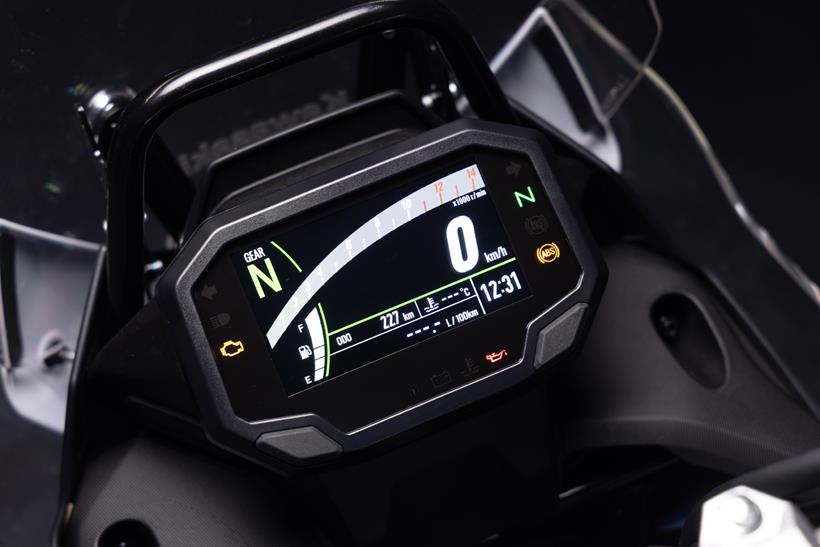
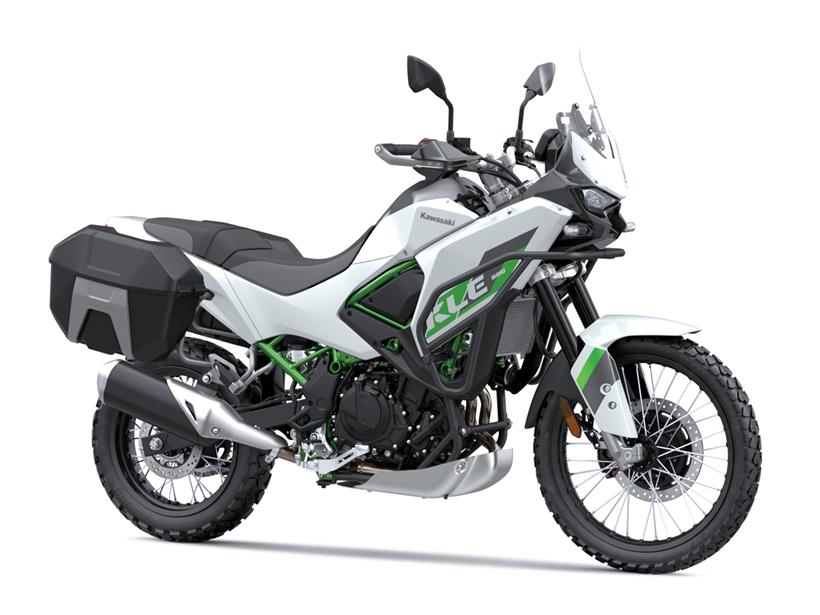
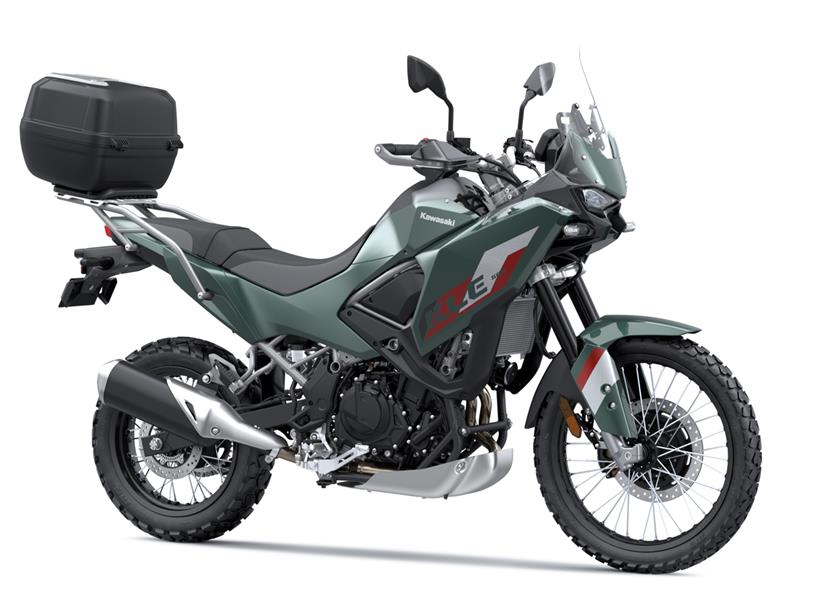
There are two core mechanical specfications: the basic KLE500 (£5999, short screen, LCD dash) and the SE, (£6599) which has a TFT screen and a 106mm higher screen as standard, plus metal-framed handguards, a proper sump guard, LED indicators and better colour options (white or grey with green graphics – base model is more subdued in dark green or black options).
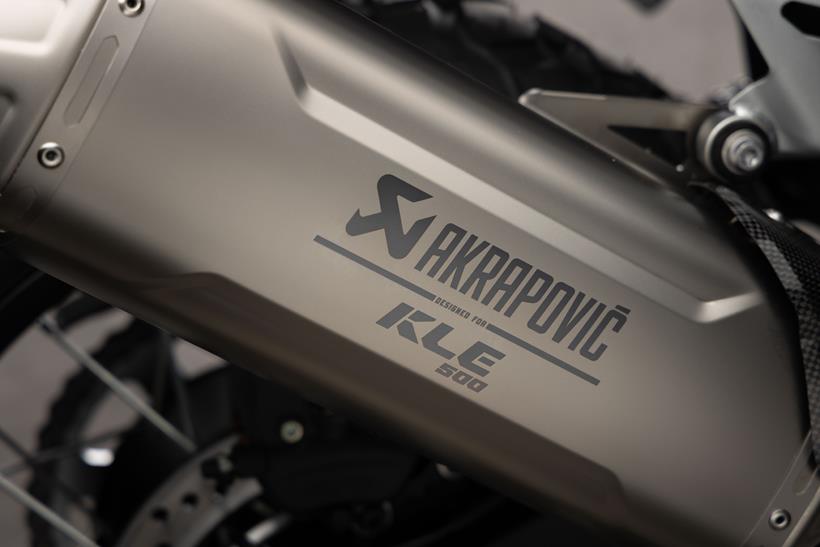
From there, there are three accessory-based packs to choose from. Rally adds the Akrapovic exhaust (makes zero difference to power or sound, but the more upswept design suits the bike much better), a USB-C port, a radiator guard and a lower, flatter rear pillion seat to aid solo body movement.
Adventure Tourer adds a set of hard panniers and a tough crash bar set to the SE, for £7699: the base model with the package also gets the handguards, sump guard and tall screen from the SE (but not the TFT dash), coming to £7499.
Finally, there’s the Urban model, aimed at KLE owners using their bike as a daily tool: a top box kit and USB-port add day-to-day practicality. It’s £6699, or £7299 as an SE Urban. All the parts are available separately, but the packs offer far value for most: the Urban parts would cost £148 more to buy on their own, without fitting, compared to buying the ready-made edition.
MCN Verdict
Kawasaki’s re-entry into the sub-500 adventure bike world is typically Japanese: it’s a well-rounded bike with little in the way of glaring issues, though nothing jumps out as class-leading or a real USP, either. It was a bit of a slow burner, but at the end of the test I found myself impressed at how it had done most things as well as you might hope. It’s easy to ride around town, fun and competent in the twisties, and makes trail riding safe and unintimidating. It has the potential to be a great everyday tool, and if the full production bikes don’t vibrate like these early bikes, it’ll be a viable tourer, too.
If I were to buy one, a short screen would be the first thing I’d fit, and then I’d be researching fun byways that don’t have rocks and other obstacles to make the low-hanging sump an issue. If you’re a dedicated, confident off-roader, it’s unlikely to be your bag, but for that first foray into adventure touring it’s a really tempting, practical and fun option.
Deja una respuesta