
2025-on Triumph Scrambler 400 XC review: An off-road glow up
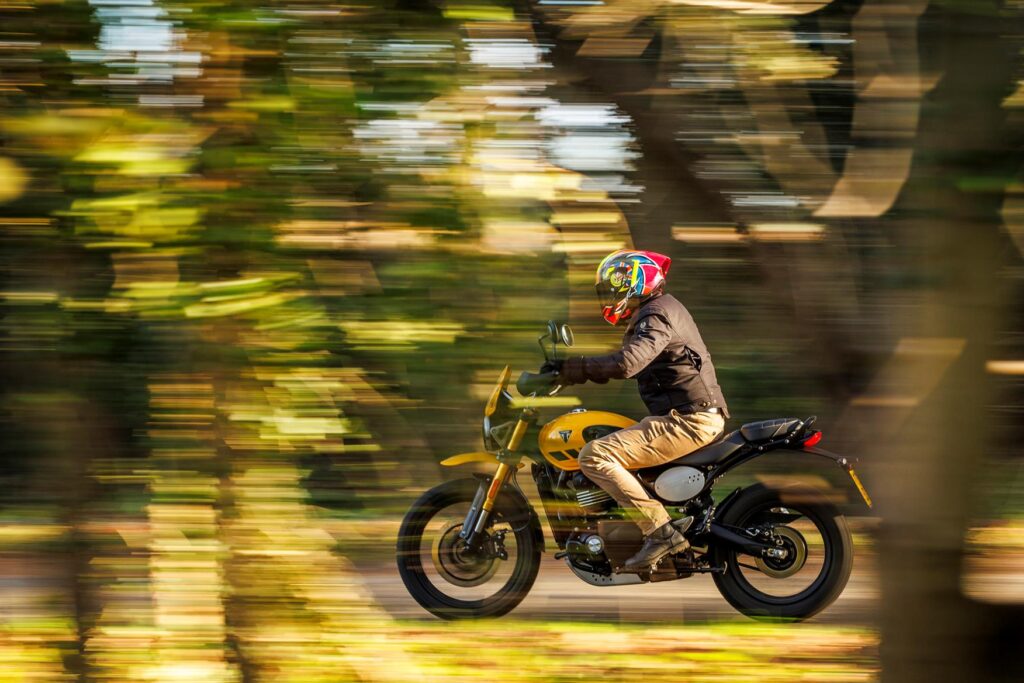
Triumph’s new Scrambler 400 XC is the latest in the British firm’s A2 licence-friendly 400cc line-up. It joins the Scrambler 400 X and road-focused Speed 400, which are both affordable and easy to get along with for new and experienced riders alike.
They’re also loaded with the kind of attention to detail that belies their reasonable price tags, which is why they’ve been such a hit. Based on the 400 X, the 400 XC shares its 398cc, 39.5bhp single-cylinder engine, tubular steel chassis, suspension, bodywork, and ergonomics, all built by Bajaj in India. The extra £700 over the 400 X buys you a stack of off-road-focused goodies, including spoked wheels, a high front mudguard, fly screen and crash bars.

It's light, manageable, easy to ride, fun, well-equipped and although its scrambler-inspired features put it the wrong side of six grand it’s still excellent value. The power delivery, gearbox, brakes, and performance aren’t as sparkling as they could be, which is no surprise for a budget machine. However, everything works reliably as it should, and the Triumph still performs well in all situations.

The single-cylinder engine starts to show signs of straining at sustained motorway speeds. Build quality and attention to detail are excellent for the price, and its Bike Shed styling will be a huge draw to many. It’s roomy for bigger riders, but could be a touch too tall for some.
Ride quality & brakes
Next up: Engine
The only change in the chassis department, when compared to the Scrambler 400 X, is the move from cast aluminium wheels to spoked ones. They still retain the 19in front and 17in rear sizing, but now come with Excel rims, shod with tubeless Metzeler Karoo Street rubber.
With its scrambler stance, the Scrambler 400 XC is a substantial size for a 400 with lots of road presence. It’s roomy and comfortable for a six-footer, and its slim dimensions and compliant suspension let it sink enough for smaller riders to get a good dab of foot down at a standstill, too. With a 835mm seat height, it may be too tall for some, so it’s worth trying one on for size before you buy.

As you’d expect from a Triumph, there are no issues in the handling department. It’s always stable, there’s plenty of grip from the Metzelers (but they’re not as smooth running as pure road tyres), wet or dry, and it steers accurately, although with its big front wheel and long, off-road wheelbase it needs a firm nudge of the bars to counter-steer from side to side.
Braking performance is adequate, but the front brake lever needs a hard squeeze for best results (the rear offers more feel), and the span of both levers can be too far away for smaller hands, even on the minimum of their five settings. Big mirrors stay vibe-free all through the revs.

We didn’t venture off-road during our test, although we did on the 400 X at its world launch. It’s perfectly happy on light green-lanes and fire tracks (especially if you fit blockier dirt tyres), and the ABS can be switched off, so the XC should be more of the same, with added feel from its spoked wheels.

Engine
Next up: Reliability
Like its siblings, the Scrambler 400 XC is characterful and easy to ride. Its liquid-cooled 398cc single-cylinder motor fires on the button up and settles into a deep burble, and the controls are light and easy to use. Power is friendly through the revs, making it easy for less experienced riders to manage, but the delivery from a closed throttle can be slightly abrupt, making it hard to be smooth in slow corners. The gearbox is accurate, but a touch notchy.

We ran the identical-engined Scrambler 400 X in our long-termer fleet last year, and it produced 33.7bhp on the dyno. That isn’t exactly face-melting power, but the Triumph has been designed to be friendly, not to wheelie off into the sunset. What it does have is enough oomph for swift acceleration, B-road fun, and it’s quick enough for motorway speeds (we’ve speed tested the 400 X at 91.84mph), but at high rpm the motor’s characterful tingles turn into bigger vibrations, as you’d expect from a single.

Reliability & build quality
Next up: Value
The Triumph Scrambler 400 XC has deep paint finishes, beautiful detailing, and 10,000-mile (or yearly, whichever comes first) service intervals. MCN’s online owners’ reviews are full of praise for the 400 X and Speed 400, but there are some reports of minor reliability issues, like faulty immobiliser lights, and corrosion on early models. Like many Triumphs, large and small, it sits up too tall on its side stand, and the headlights are lacking at night.

Value vs rivals
Next up: Equipment
Costing £6545 the Scrambler 400 XC moves slightly away from the bargain-basement cost of the Scrmabler 400X and Speed 400 that made them so popular. Compared to its closest single cylinder rivals, the BMW G310GS starts at £5595, a grand cheaper with none of the retro charm, but Fantic's Cabellero Scrambler 500 comes in at £6749, a few pounds more for something a bit different.
At the value end of the market you can try and snatch a bargain and find one of the few new Royal Enfield Scram 411's left in show rooms, that cost a more affordable £3399. The Triumph and Fantic all have that retro feel and traditional scrambler looks, with some nicer touches and components, creating loads of single cylinder scrambler choice out there. Whether you are after Triumph's plush finish or Royal Enfield's value, check out MCN's online Bikes for Sale, where used examples of the RE Scram and Triumph's older Scrambler 400 X can be had for as little as £2700.

Equipment
In addition to its new spoked wheels, a high front mudguard, fly screen and crash bars, the Scrambler 400 XC comes with adjustable clutch and brake levers, a sump guard, stitched seats, tank pads, grab rail, an analogue/digital dash, LED lights, a USB-C charger, hand guards, a chrome fuel cap, switchable traction control and ABS.
The 400 XC’s extra parts add 7kg over the 400 X, but there’s no more noticeable feeling of bulk at walking speeds or around town.

Deja una respuesta