
2026-on Kawasaki Z1100 SE review: Bigger, better, meaner!
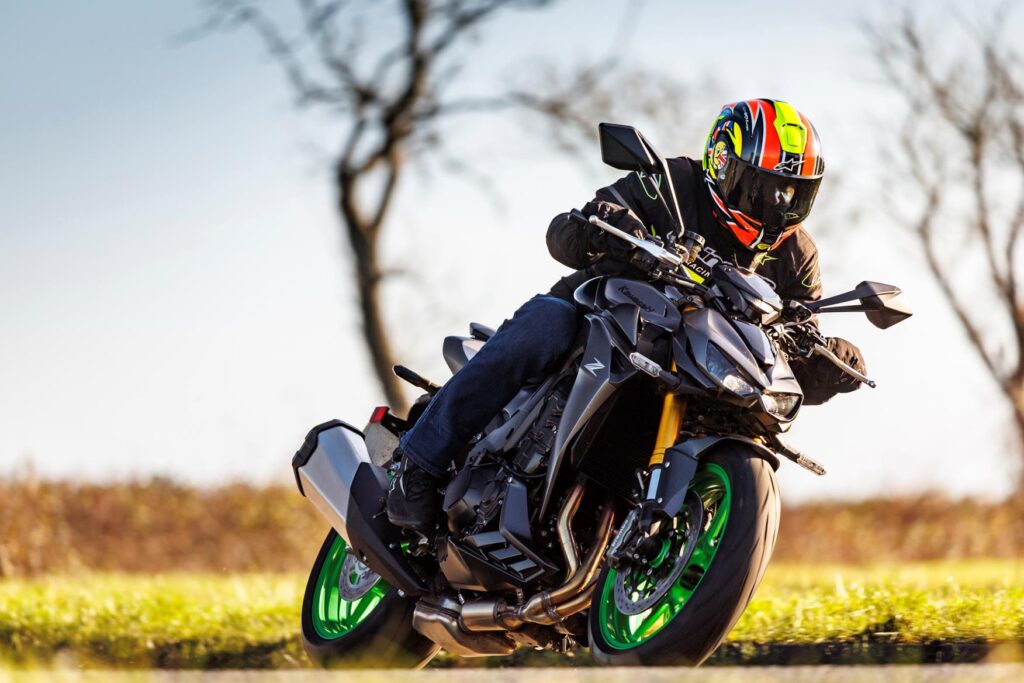
Kawasaki’s old Z1000 ran from 2004 to 2020 before it quietly disappeared from their line-up. It left the Z900 and supercharged Z H2 to fly the Japanese firm’s sporty naked flag, but now it’s back with a new name, bigger engine, the latest electronics, and available in two versions: the £11,099 Z1100 and this, the £12,699 Z1100 SE.
With European sports nakeds becoming ever more powerful and expensive in recent times, their Japanese rivals have become more relevant, so it’s perfect timing for Kawasaki’s big Zed to re-enter the fray.
With its larger new grunt-focused engine, the Z1100 leaves most of its wild days behind and is instead smoother, with a bigger wodge of effortless, real-world power at road speeds… although it still doesn’t hang around and makes all the right noises when you push its buttons.

It’s easy to ride, nicely balanced, and fun in the corners, although better tyres would let it shine even brighter. Build quality is superb and the Zed has a more modern feel, thanks to its new colour dash, rider aids, smooth quickshifter, and cruise control. The SE’s Öhlins and Brembo add extra spice, but at a cost, which is a significant chunk more than its main rival: Honda’s Hornet 1000 SP.

Ride quality & brakes
Next up: Engine
As before, the Kawasaki is relatively small, but isn’t too cramped for taller riders, although the seat starts to get uncomfortable after an hour, or so. The peg position is still sporty, but not knee-crushing, or wristy, either despite new 22mm wider/13mm further forward D.I.D handlebars, designed to shove more of the rider’s weight over the front wheel, to improve feel and grip.

The frame, swingarm, and bodywork are unchanged from the Z1000. We had to take it steady on cold, damp December roads, but the Z1100 is well balanced, stable, and floats effortlessly through corners. Steering is light and accurate, and there’s decent grip from its standard-issue Dunlop Q5A tyres, although they’re prone to tramline. It still uses a relatively flat-section 190/50 x 17 rear, instead of a more modern balloon-shaped 55-profile.

Both Z1100 models have fully adjustable Showa forks, but this SE model comes with an Öhlins S46 rear shock, which is relatively basic and only adjustable for preload and rebound damping. It doesn’t offer the last word in double-cream plushness, like a higher-spec or semi-active Öhlins, but is a nice compromise for sporty riding and comfortable cruising.
Braking feel from the SE’s upgraded Brembo discs and M4.32 calipers is the best we’ve felt from a Kawasaki in a very long time, making them a joy to use.

Engine
Next up: Reliability
Compared to the old 140bhp, 1043cc Z1000, Kawasaki have increased the inline four’s capacity to 1099cc with a 3mm longer stroke – the same upgrades as the latest Versys 1100 and Ninja 1100SX enjoys.
It also gets a raft of new internals, like a heavier flywheel, milder cams, new pistons, valve springs, and exhaust to boost midrange oomph. It’s now ride-by-wire, too, which facilitates lean-sensitive traction control, anti-wheelie, ABS and an up/down quickshifter.

It makes 134bhp, which is less than before and trails its rivals, but you’d never guess at road speeds. The big Zed’s delivery is deliciously smooth, flexible, and you don’t have to go looking for power, whether you want a lazy overtake in a high gear, or you stir the crisp ‘n light gearbox to keep the revs on the boil.
When the Z1100 is on full song, the airbox growls, quickshifter crackles, and the anti-wheelie works overtime to keep the front wheel down in the first three gears.

The old Z1000 was always quick, but the new Z1100’s extra grunt makes it sparkle as a real-world road bike. Now, with longer gearing, the motor is more relaxed in top gear (70mph@4500rpm) and you’re no longer searching for that elusive ‘seventh’ at cruising speeds.
Despite its strong performance, the Kawasaki’s flawless power delivery and smooth rider aids make it as manageable as a naked with half the power. We saw an average 44mpg (36mpg worst, 51mpg best) during our test.

Value vs rivals
Next up: Equipment
In base trim, the Z1100 costs a hundred quid more than the £10,999 Suzuki GSX-S1000 and two grand more than the £9099 Honda Hornet 1000. In Z1100 SE guise, it’s a massive £2600 dearer than the £10,999 Hornet 1000 SP (MCN’s Bike of the Year) and 21bhp down, but the Kawasaki makes more torque at lower rpm.
The Honda will take some beating, and it’ll be interesting to see how the Suzuki, Honda, and Kawasaki compare when MCN tests them head-to-head.

Equipment
Traction and wheelie control, ABS and an up/down quickshifter are standard, as well as an easy-to-adjust cruise control, which is a welcome touch to reduce fatigue on motorways, especially on a naked.

The Z1100 also gets a new belly pan, a (tacked-on) USB-C charger, a reshaped front mudguard to protect the fork sliders, conventional rear wheel adjusters (to replace the old eccentric items), and round, instead of petal-shaped discs.

A new 5in multi-function colour TFT dash with Bluetooth connectivity, is controlled by new switchgear and features four riding modes (Sport, Road, Rain, Rider). Standard lights are average in the dark.
Deja una respuesta