
2026-on Rieju Aventura 307 Rally review: Big spec, low price
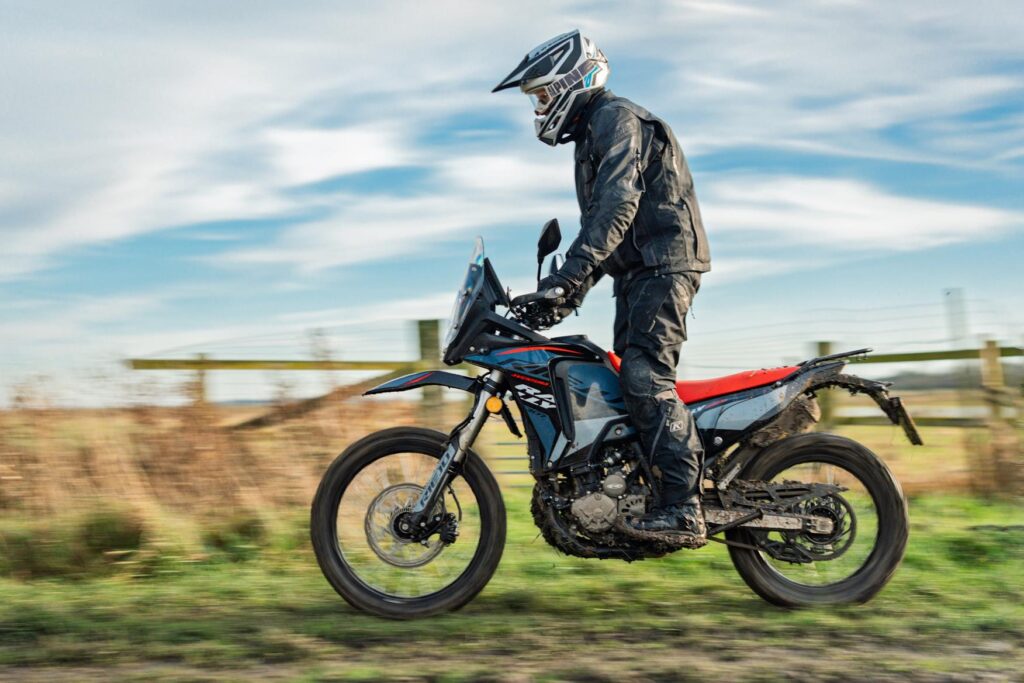
The fully adjustable suspension is unbranded, and presumably Chinese made: expectations are low before you ride, but it’s a pleasant surprise to find the Rieju Aventura 307 Rally’s suspension is firm and controlled as delivered: the Honda and Voge’s barely adjustable dampers come on the soft side, making them easy to overwhelm if you’re heavier, or ride it with any kind of gusto.
We received our test bike with just two miles on the clock, and found it a little too firm, if anything, for both road and trail hits. This may ease with more miles as everything beds in, but we opted to ease the compression damping adjusters back a little, finding them surprisingly, pleasingly effective.
There is no excessive pitch from the relatively long travel (235mm), yet once adjusted the ability to soak up potholes, roots and other big clouts from the terrain in a way better than most of its direct rivals: in the dirt, it feels more like a smaller trail bike. In fact, it’s better than some of those, too…
Measured wet weight is just 160kg (dry weight is 138kg, claimed) – for comparison, a Honda CRF300L Rally is 153kg on MCN’s scales, but the 7kg difference is made up entirely by the Rieju’s extra fuel capacity. If you don’t brim the 20.5-litre tank (a class-leading capacity) there’ll be no difference between the two, and the way the lower portion of the tank carries fuel mass low either side of the cylinder head avoids a feeling of top-heaviness.
The wheelbase is short (35mm less than a CRF, 90mm less than a Royal Enfield Himalayan 450) so it’s nimble too, and overall it has a sense of easy balance, particularly when dealing with wet, sloppy trails during our mid-winter test. It’s confident to thrum along unpaved tracks in third, absorbing rough stuff and finding more grip than the basic Helios trail tyres have any right to.

When the going is really tricky, it’s easy to move your weight around and keep it driving forward and keep it upright without too many dabs. It’s so competent and fun on trails, it actively motivates you to seek out more byways.
The riding position is roomy whether stood or sat down, and didn’t give me any cause for complaint at 6ft’ with a 33in inside leg. Shorter riders, around the 5’8” mark, could still reach the floor just fine thanks to the narrow stand-over. The seat is firm, and feels uncomfortable for the first few miles, but it gets better as you settle in unusually, giving good support for a couple of hours of continuous riding as well as not hindering body placement when standing on the pegs.

ABS is standard and active by default, as legislation demands, but it’s easy to deactivate: select off-road mode in the dash, then hold the ABS button on the switches.
The brakes themselves (off-brand stuff again) are fine, nothing more – though the ABS, when active on the road, is surprisingly good: there’s no premature or heavy-handed activation, despite being a basic, non-lean angle sensitive system: you can squeeze the brake until the front tyre howls, and when the system does cut in, it’s a gentle relief of brake pressure.

It’s good to ride on the road, too: the small-brand tyres work well, even in the wet, and its easy-going manners make it good around town as well as minor country lanes: it’s very up to use as a daily commuter as well as weekend on/off-road adventure tool.
Deja una respuesta